
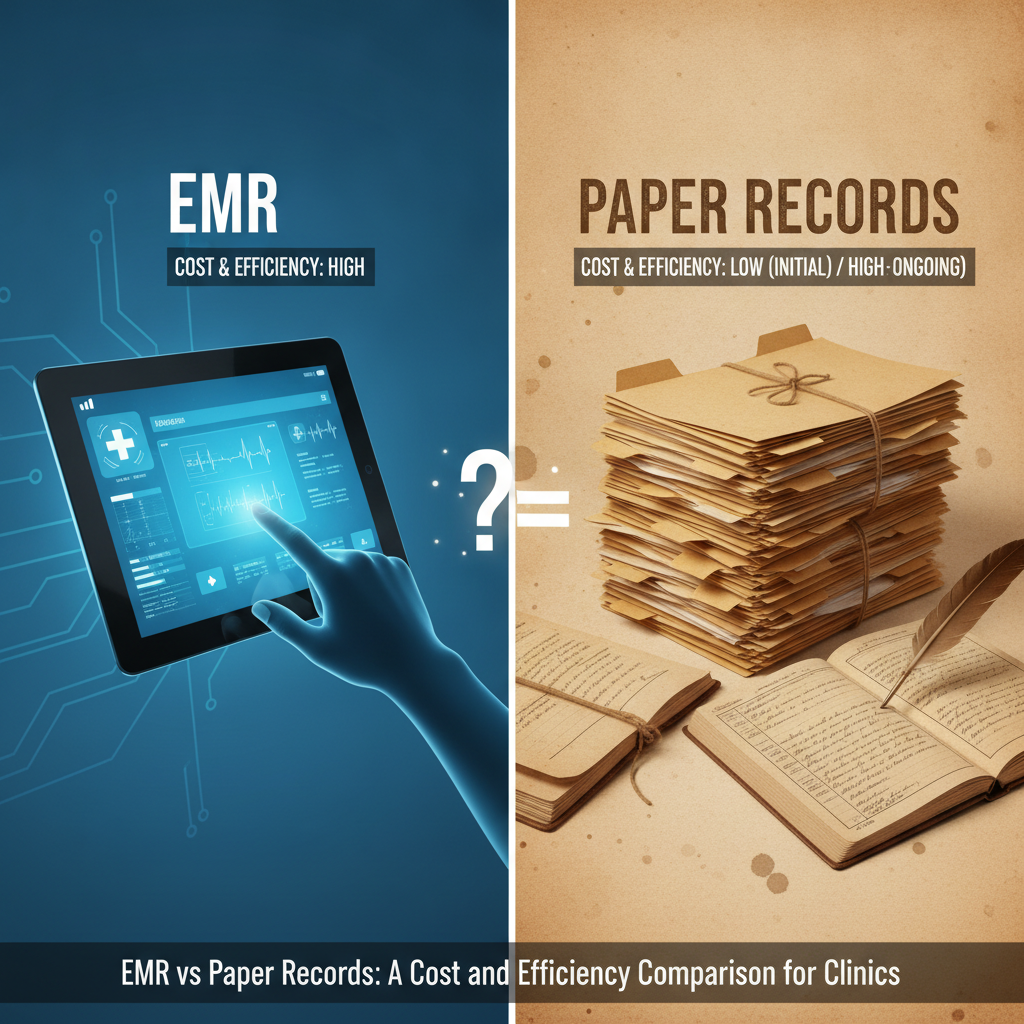
EMR vs. Paper Records: A Comprehensive Cost & Efficiency Comparison for Modern Clinics
In today’s rapidly evolving healthcare landscape, clinics are constantly seeking ways to optimize operations, reduce costs, and enhance patient care. A foundational decision impacting all these areas is how patient health information is managed. For years, paper charts were the standard. Now, Electronic Medical Records (EMRs) offer a powerful alternative. But which truly offers the best return on investment and operational efficiency?
Let’s dive deep into an EMR vs. paper records comparison to help your clinic make an informed choice.
The Hidden Burden of Paper Records: More Than Just Paper
While paper records might seem “free” or low-cost initially, their true expense extends far beyond the price of a ream of paper.
Direct Financial Costs
* **Physical Storage:** The constant need for filing cabinets, off-site archives, and the physical clinic space dedicated to storing records represents a tangible overhead. This space could otherwise be used for patient care or additional revenue-generating activities.
* **Supplies:** The ongoing purchase of paper, folders, ink, toner, and printer maintenance adds up significantly over time.
* **Shredding Services:** Securely disposing of outdated or sensitive paper records requires specialized shredding services to maintain HIPAA compliance, adding another recurring cost.
Operational Inefficiencies & Indirect Costs
* **Staff Time & Labor:** Manual filing, retrieving charts, searching for misplaced records, and refiling consume a tremendous amount of valuable staff time. This translates directly into higher labor costs that could be redirected to patient care or other critical administrative tasks.
* **Lost or Misplaced Records:** The frustration and potential medical errors caused by lost charts are immeasurable. Re-creating records is time-consuming and can compromise patient safety and lead to potential compliance issues.
* **Data Entry Errors:** Manual transcription and handwriting can lead to illegibility and increased risk of data entry mistakes, impacting billing, prescriptions, and patient care.
* **Security Vulnerabilities:** Paper records are highly susceptible to physical threats like fire, flood, theft, or unauthorized viewing, making HIPAA compliance a constant challenge.
* **Slow Information Flow:** Sharing patient information between providers, specialists, or even different departments within the same clinic is a cumbersome, slow, and often impossible process with paper. Remote access is non-existent.
* **Limited Scalability:** As your clinic grows and your patient volume increases, so does your paper mountain, demanding more space and resources without proportional increases in efficiency.
Embracing the Future: EMR’s Cost Savings and Efficiency Gains
Transitioning to an EMR system involves an initial investment, but the long-term cost savings, efficiency improvements, and enhanced patient care often far outweigh the upfront expense.
Initial Investment vs. Long-Term Savings
* **Upfront Costs:** Yes, there are initial expenses for software licenses, hardware (computers, servers), data migration, and staff training.
* **Significant Long-Term Savings:** These investments quickly begin to pay off through virtually eliminating paper and storage costs, drastically reducing administrative staff hours dedicated to chart management, and minimizing errors that lead to costly rework or denied claims.
Enhanced Operational Efficiency
* **Instant Access:** Patient records are available at any authorized workstation, anytime, anywhere (with secure access), eliminating search times and allowing for remote work capabilities.
* **Streamlined Workflows:** EMRs automate numerous processes, including appointment scheduling, e-prescribing, lab order integration, referral management, and charting templates, significantly reducing manual tasks.
* **Improved Collaboration:** Seamless sharing of patient data among care teams, specialists, and even other healthcare facilities (with proper authorization) ensures coordinated and comprehensive care.
* **Reduced Errors:** Standardized forms, built-in error-checking, and clear, legible digital entries virtually eliminate transcription mistakes and improve patient safety.
* **Faster Billing Cycles:** Integrated billing and coding functions, alongside improved documentation accuracy, can accelerate claims processing and reduce denials, leading to a healthier revenue cycle.
Superior Patient Care & Engagement
* **Comprehensive View:** Clinicians gain quick, holistic access to a patient’s entire medical history, allergies, medications, and test results, leading to more informed and better clinical decisions.
* **Proactive Care:** EMRs can analyze data to identify patients due for preventative screenings, vaccinations, or chronic disease management follow-ups, enabling proactive and preventative care.
* **Patient Portals:** Many EMRs offer patient portals, empowering individuals with appointment scheduling, prescription refill requests, secure messaging with providers, and access to their own health information, fostering greater engagement and satisfaction.
Robust Security & Compliance
* **HIPAA Compliance:** Reputable EMR systems are designed with advanced security features, including data encryption, granular access controls, audit trails, and secure data transmission protocols, making it easier to meet HIPAA regulatory requirements than with paper.
* **Automated Data Backup:** Regular, automated backups protect against data loss from hardware failure, human error, or natural disasters, ensuring business continuity.
Beyond the Balance Sheet: Strategic Advantages of EMR
The benefits of EMR extend beyond direct financial and efficiency gains, offering strategic advantages that can future-proof your clinic.
* **Scalability for Growth:** Easily accommodate more patients and providers without needing additional physical space for records, allowing your practice to expand effortlessly.
* **Data Analytics and Reporting:** EMRs can extract valuable insights into clinic performance, patient demographics, health trends, and treatment outcomes, empowering data-driven strategic decisions.
* **Enhanced Reputation:** Adopting modern technology like an EMR positions your clinic as forward-thinking, efficient, and patient-focused, enhancing your professional reputation and attracting new patients.
* **Attracting Top Talent:** Healthcare professionals increasingly prefer to work in technologically advanced environments where they can deliver the best possible care with efficient tools.
Making the Right Choice for Your Clinic
While the initial familiarity and seemingly lower upfront cost of paper records might be appealing, their long-term costs, operational inefficiencies, and inherent limitations far outweigh the upfront investment required for an Electronic Medical Records system.
An EMR system offers a powerful solution for modern clinics seeking to enhance patient care, streamline operations, reduce costs, improve security, and ensure compliance. By making the switch, your clinic isn’t just adopting new technology; it’s investing in a more efficient, secure, and patient-centric future.
Consider conducting a thorough internal assessment of your current paper-based processes and calculate the true “hidden” costs before making your decision. The future of healthcare is digital, and clinics that embrace it will be best positioned for success.
Frequently Asked Questions (FAQs)
Q: Is EMR adoption expensive for small clinics?
A: While there is an initial investment, many EMR solutions offer scalable pricing models for smaller practices. The long-term savings in staff time, reduced errors, and improved billing often provide a significant return on investment that outweighs the initial cost.
Q: How long does EMR implementation typically take?
A: The timeline varies depending on the size and complexity of the clinic, the amount of data migration, and staff training needs. It can range from a few weeks to several months. Thorough planning and choosing the right vendor can help streamline the process.
Q: What about data security with EMRs? Is it safer than paper?
A: Reputable EMR systems incorporate robust security measures such as encryption, access controls, audit trails, and secure data backups, often making them more secure and compliant with HIPAA regulations than vulnerable physical paper records.
Q: Can I integrate my old paper records into an EMR?
A: Yes, many clinics choose to scan critical historical patient data into their EMR, or they run a hybrid system for a period, gradually transitioning. Your EMR vendor can guide you on the best strategy for data migration.