
AI in EMR Systems: Revolutionizing Healthcare for Smarter Diagnostics, Faster Decisions, and Better Care
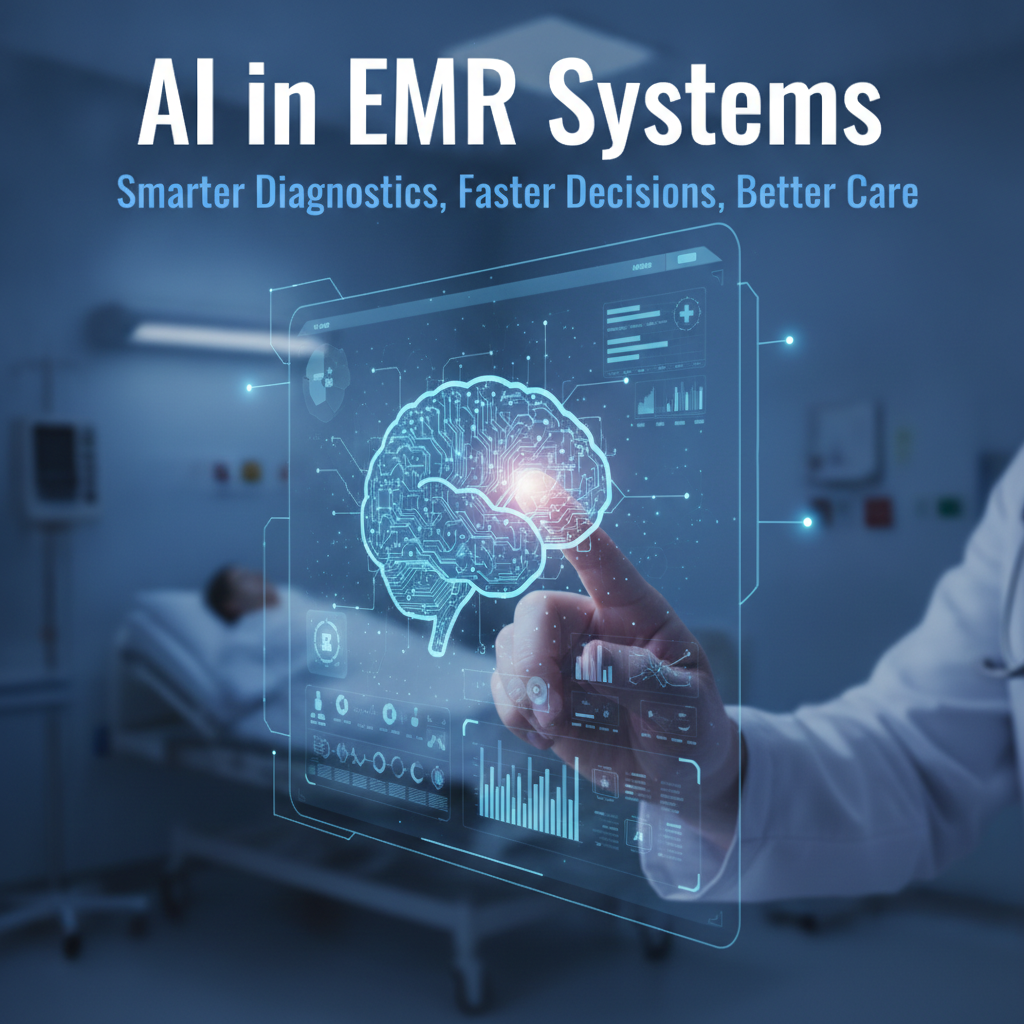
The healthcare landscape is undergoing a profound transformation, driven by technological innovation. At the forefront of this revolution is the integration of **Artificial Intelligence (AI) into Electronic Medical Record (EMR) systems**. Far from just digital filing cabinets, modern EMRs, supercharged by AI, are becoming intelligent partners in patient care, promising a future of **smarter diagnostics, faster clinical decisions, and ultimately, better patient outcomes.**
For years, healthcare professionals have grappled with vast amounts of patient data, often leading to information overload and the potential for missed insights. AI offers a powerful solution, converting this deluge of data into actionable intelligence, redefining how we approach diagnosis, treatment, and overall patient management.
Smarter Diagnostics: Unveiling Hidden Insights
One of AI’s most impactful contributions to EMR systems is its ability to enhance diagnostic capabilities. Traditional diagnostic processes can be time-consuming and sometimes prone to human variability. AI, however, excels at processing and analyzing massive datasets – from patient history and lab results to imaging scans and genomic data – with unparalleled speed and accuracy.
- Pattern Recognition: AI algorithms can identify subtle patterns and correlations in data that might be imperceptible to the human eye, flagging early indicators of disease even before symptoms become pronounced.
- Reduced Diagnostic Errors: By providing objective analysis and cross-referencing against millions of cases, AI helps reduce diagnostic errors, leading to more accurate and timely interventions.
- Predictive Analytics: AI can predict the likelihood of certain conditions developing, such as sepsis or cardiac events, allowing clinicians to intervene proactively.
This capability translates directly into earlier disease detection, improved prognosis, and more effective treatment plans, moving healthcare towards a truly proactive model.
Faster Decisions: Empowering Clinicians in Real-Time
In critical healthcare scenarios, every second counts. AI in EMR systems acts as an intelligent assistant, empowering clinicians to make faster, more informed decisions.
- Clinical Decision Support Systems (CDSS): AI-powered CDSS can instantly analyze a patient’s EMR and provide real-time, evidence-based recommendations on treatment options, drug dosages, potential interactions, and risk assessments.
- Optimized Workflow: By automating routine data analysis and information retrieval, AI reduces administrative burden, freeing up valuable time for healthcare providers to focus more on patient interaction and complex cases.
- Resource Management: AI can predict patient flow, optimize bed assignments, and manage staffing more efficiently, leading to smoother hospital operations and better patient access to care.
The result is a more efficient healthcare system where professionals are supported by intelligent tools, leading to quicker diagnoses and more agile responses to patient needs.
Better Care: Towards Personalized and Proactive Healthcare
The ultimate goal of integrating AI into EMRs is to elevate the quality of patient care. AI facilitates a shift from a one-size-fits-all approach to highly personalized and proactive healthcare.
- Personalized Treatment Plans: By analyzing a patient’s unique genetic makeup, lifestyle, and medical history within the EMR, AI can help tailor treatment plans for maximum efficacy and minimal side effects, ushering in an era of **precision medicine**.
- Enhanced Patient Safety: AI can flag potential adverse drug reactions, allergies, or inconsistencies in a patient’s record, significantly enhancing patient safety.
- Proactive Health Management: Through continuous monitoring and predictive insights, AI enables healthcare providers to intervene before conditions worsen, supporting preventative care and improving long-term health outcomes.
From reducing readmission rates to fostering greater patient engagement, AI-driven EMRs are paving the way for a healthcare experience that is safer, more effective, and deeply centered around the individual.
The Future is Now: Addressing Challenges and Embracing Innovation
While the potential of AI in EMR systems is immense, its implementation comes with considerations. Issues such as data privacy, security, ethical guidelines, and ensuring seamless integration with existing systems are paramount. However, ongoing advancements and collaborative efforts among technologists, clinicians, and policymakers are steadily addressing these challenges.
The journey towards fully leveraging AI in EMRs is a continuous one, but the direction is clear: a future where healthcare is more intelligent, efficient, and above all, designed to deliver the best possible care for every patient.
Ready to explore how AI-powered EMR solutions can transform your practice?
The synergy between AI and EMRs is not just a technological upgrade; it’s a fundamental reimagining of healthcare delivery. By harnessing **AI in EMR systems**, we are building a future of **smarter diagnostics, faster decisions, and ultimately, better care** for everyone.