
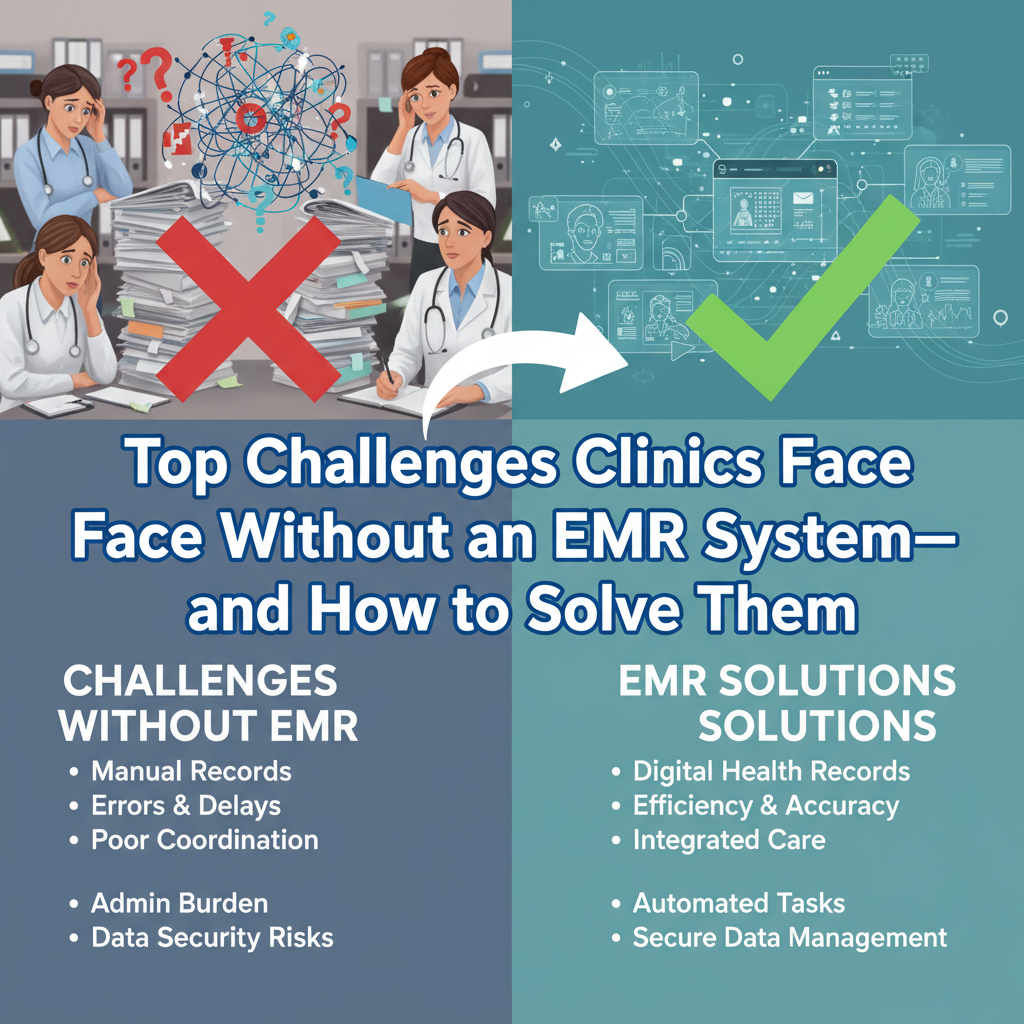
Top Challenges Clinics Face Without an EMR System—and How to Solve Them
In today’s fast-paced healthcare landscape, clinics are under constant pressure to deliver exceptional patient care while maintaining operational efficiency and financial stability. For practices still relying on paper-based systems or fragmented digital solutions, the challenges can feel insurmountable. An Electronic Medical Record (EMR) system is no longer a luxury but a necessity.
This post will explore the critical hurdles clinics face without a robust EMR system and, more importantly, outline how adopting the right EMR solution can transform these obstacles into opportunities.
The Critical Hurdles Clinics Face Without an EMR
Operating without a comprehensive EMR system can create a cascade of problems, impacting everything from patient safety to staff morale and the bottom line.
1. Inefficient Workflows & Administrative Burden
Without an EMR, simple tasks become time-consuming endeavors. Manual charting, paper filing, scanning documents, and endless searching for patient records consume valuable staff time that could be spent on patient care. This leads to bottlenecks, delays in appointments, and overall reduced productivity.
2. Compromised Patient Care & Experience
Lack of immediate access to a patient’s complete medical history, allergies, medications, and previous test results can lead to medical errors, missed diagnoses, and suboptimal treatment plans. Patients also experience longer wait times, repetitive form filling, and frustration when their information isn’t readily available across different departments.
3. Data Security Risks & Compliance Headaches
Paper records are vulnerable to loss, theft, and damage, posing significant privacy and security risks. Additionally, ensuring HIPAA compliance with paper-based systems is an ongoing struggle, making audits and data breach responses incredibly difficult and costly.
4. Lost Revenue & Billing Errors
Manual billing processes are prone to human error, leading to missed charges, incorrect coding, and delayed insurance claims. This directly impacts a clinic’s revenue cycle, causing cash flow problems and requiring more administrative effort to correct discrepancies.
5. Physician Burnout & Staff Frustration
Healthcare professionals entered the field to care for patients, not to wrestle with paperwork. The administrative overload, repetitive tasks, and inefficiencies of non-EMR systems contribute significantly to physician burnout and staff dissatisfaction, leading to high turnover rates.
6. Lack of Data Insights & Reporting
Without an EMR, clinics struggle to analyze performance metrics, identify trends, or generate meaningful reports. This absence of data makes it challenging to make informed decisions about clinic operations, patient outcomes, and strategic growth.
The EMR Solution: Overcoming Obstacles and Transforming Your Clinic
Implementing a well-chosen EMR system directly addresses these challenges, paving the way for a more efficient, secure, and patient-centered practice.
Streamline Operations & Boost Productivity
An EMR digitizes patient information, automating tasks like scheduling, charting, and prescription refills. This reduces administrative burden, frees up staff for more critical duties, and accelerates patient flow, allowing clinics to see more patients efficiently.
Enhance Patient Care & Engagement
With an EMR, providers have instant access to a patient’s comprehensive medical history, enabling faster, more accurate diagnoses and personalized treatment plans. Patient portals improve communication, allow for online appointment booking, and empower patients to take a more active role in their health management.
Fortify Security & Ensure Compliance
Modern EMR systems come with robust security features, including encryption, access controls, and audit trails, significantly reducing the risk of data breaches. They are designed to help clinics meet HIPAA and other regulatory requirements, simplifying compliance and providing peace of mind.
Optimize Revenue & Minimize Errors
Integrated EMR and practice management systems automate billing and coding, minimizing errors and accelerating the claims submission process. This leads to a healthier revenue cycle, reduced denials, and improved financial stability for the clinic.
Empower Staff & Reduce Burnout
By eliminating tedious manual tasks and providing intuitive tools, an EMR system reduces stress and frustration for physicians and staff. This allows them to focus on patient interaction, improving job satisfaction and reducing burnout.
Unlock Data-Driven Decisions
EMR systems provide powerful analytics and reporting tools. Clinics can track key performance indicators, identify areas for improvement, and gain insights into patient populations, treatment effectiveness, and operational efficiency, leading to smarter strategic planning.
Is Your Clinic Ready for a Transformation?
The challenges of operating without an EMR system are significant, but so are the rewards of adopting one. By embracing an EMR, clinics can move beyond daily struggles to build a more efficient, secure, and patient-focused practice. It’s an investment that pays dividends in improved patient outcomes, increased revenue, and a happier, more productive team. Don’t let your clinic be held back by outdated processes—explore the power of an EMR system today.